

Human minds struggle with grasping very low probabilities. We’re asked to act on statements like “less than 1 in 100,000,” and our language reaches for metaphors: needle in a haystack, grain of sand on a beach, trying to visualize the improbable.
The foveated bias of visual acuity
Human perception doesn’t work like a camera sensor. From the eye to the cortex, our vision is deeply uneven. We stitch together the visual scene by rapidly moving our eyes, collecting sharp detail from a tiny central patch: the fovea, which spans just 1 to 2 degrees of visual angle. That’s less than one-thousandth of the space in front of us.
Despite its size, that foveated region claims half of our primary visual cortex.
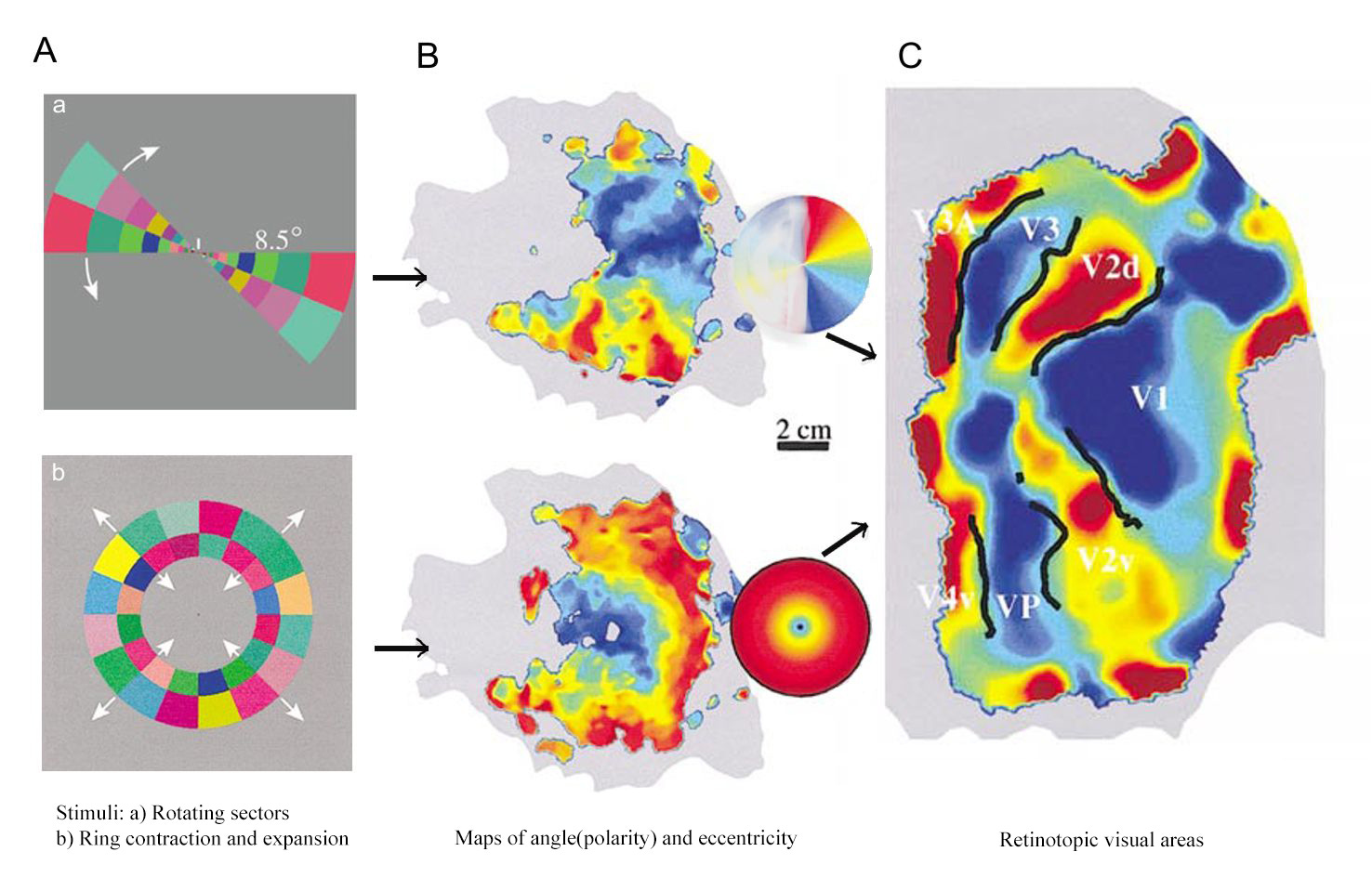
Figure 1: Retinotopic projections into the visual cortex [wiki]
What dominates the physical eye and visual cortex likely dominates the mind’s eye too. So when someone says an event has a one-in-a-million chance and compares it to “hitting a tissue on a football field,” our visual imagination immediately zooms in on the tissue. We fail to perceive the proper ratio. The metaphor breaks.
Reframing the risks
Let’s take a few examples of highly unlikely events:
Winning a 6/49 lottery: 1 in 14 million
Winning Powerball: 1 in 292 million
Being dealt a royal flush on the first hand: 1 in 650,000
Dying today as a 40-year-old man in Cambridge (either one): 1 in 130,000
Serious adverse drug reaction: “less than 1 in 500”
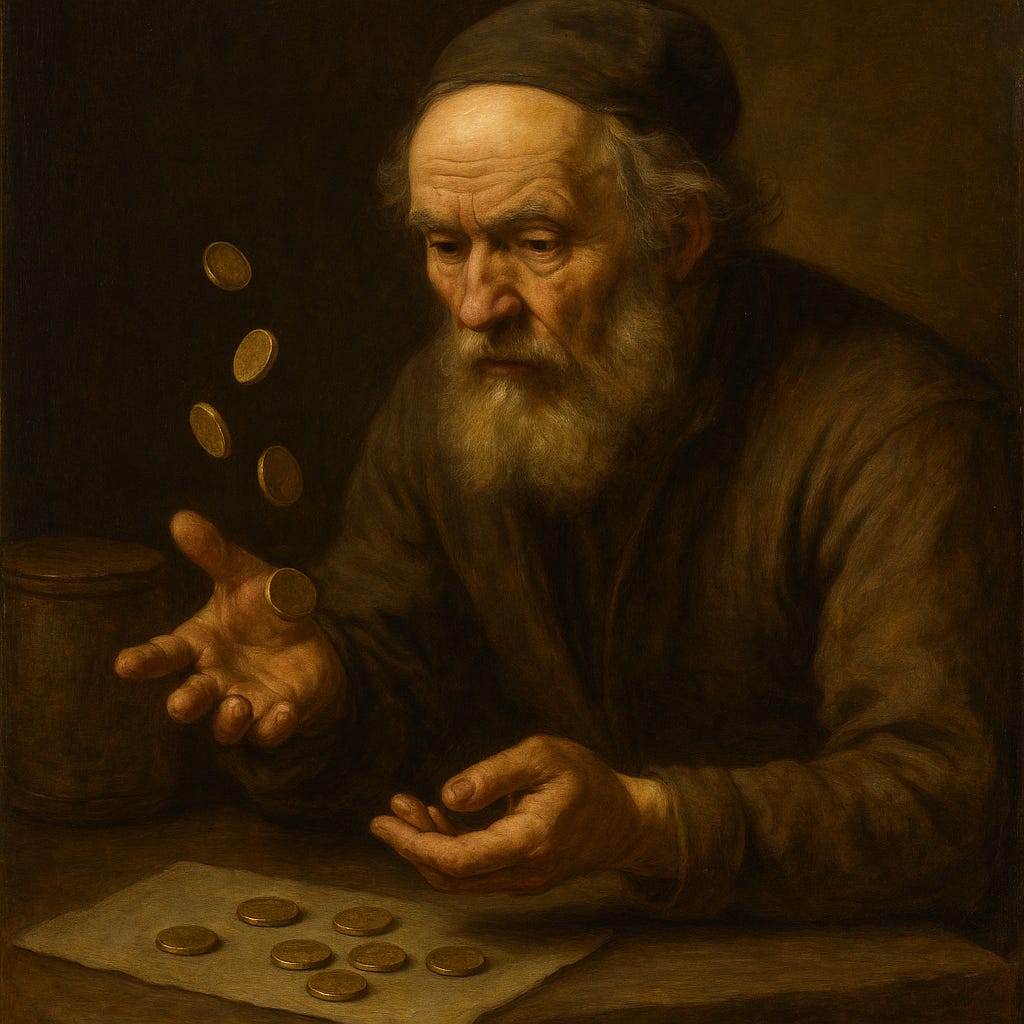
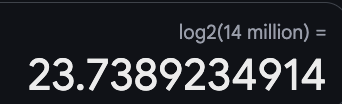
Now, let’s ground those numbers with something physical: coin tosses. The logarithm base 2 of a number tells us how many heads in a row would equal that probability. Google log2(14 million), and you get 24. That means your chance of winning the lottery is equivalent to flipping 24 heads in a row.
Here’s a quick table:
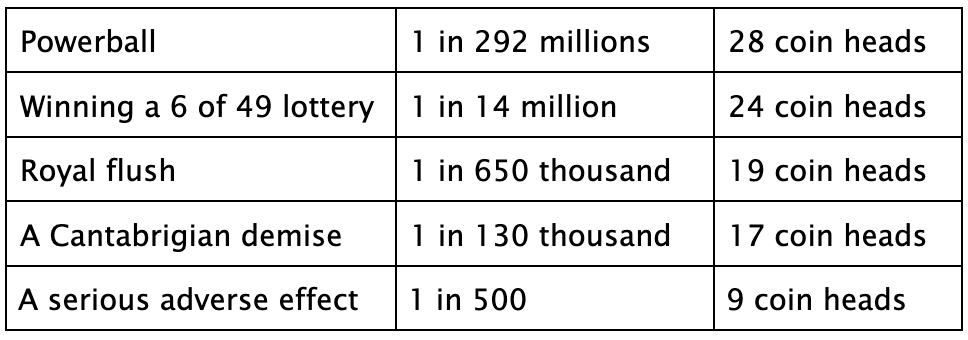
By converting abstract numbers into a simple physical experiment we build intuition. We feel the rarity.
I call it the grounding coin toss.